
A pasture that ran cattle clean ten years ago can be half brush today without anyone quite noticing how it happened — pine seedlings and privet creep in from the fence line a little more every season until the cattle are bunched up on the good ground and the rest is going to waste. Circle B3 Mulching & Land Works is based in Prentiss and provides pasture and field clearing throughout Jefferson Davis County and beyond, reclaiming overgrown grazing land and cropland by mulching brush and volunteer timber back to grade — not just knocking it down and leaving it in piles. Call (601) 640-4095 for a free estimate on your pasture or field around Brookhaven.
What Pasture & Field Clearing Actually Involves
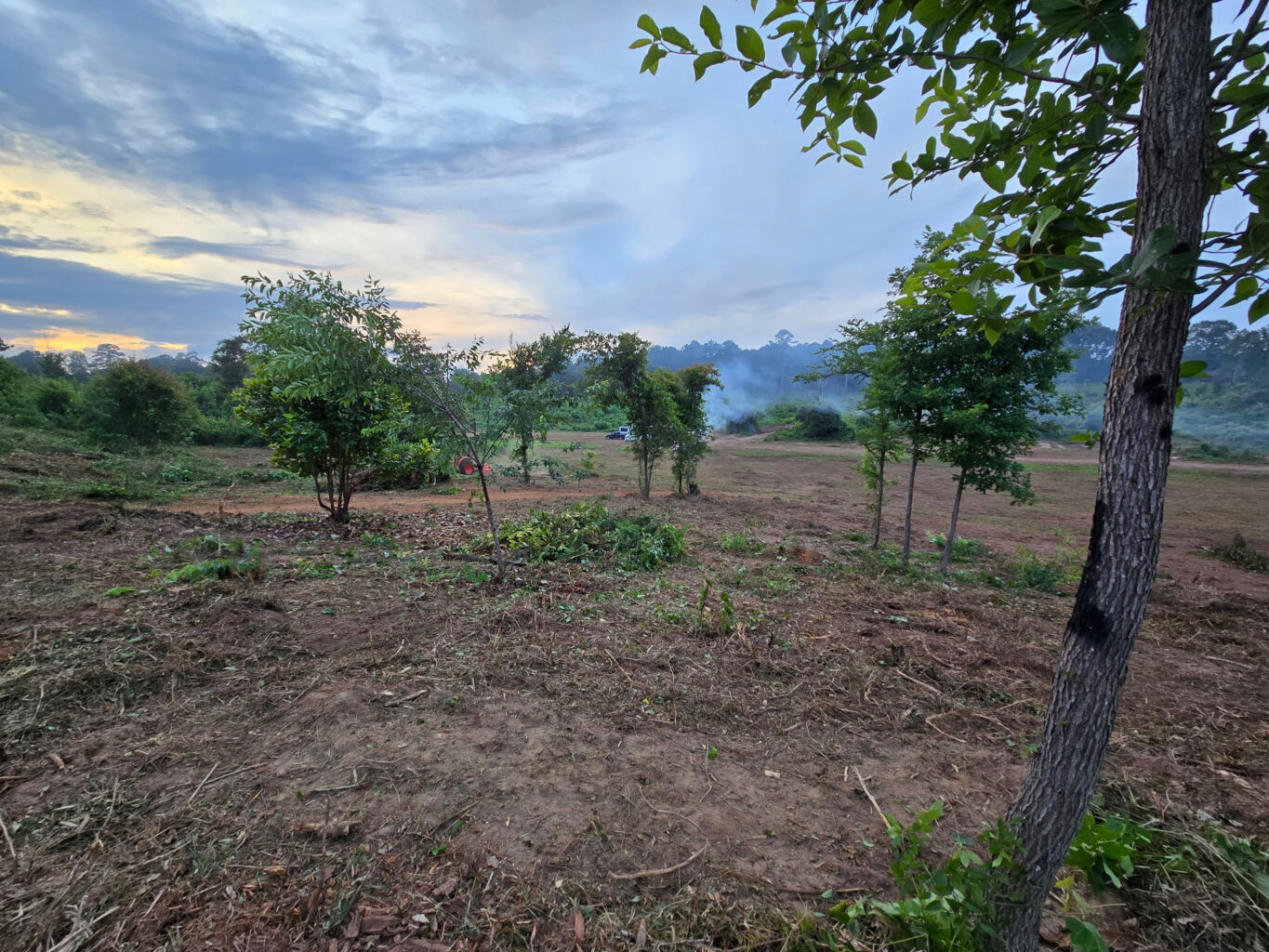
Pasture and field clearing reclaims agricultural ground that’s lost grazing or cropland capacity to brush, volunteer pine, and woody encroachment, restoring it to usable acreage without the compaction and bare soil that comes with heavier equipment. Most reclamation jobs in Lincoln County start the same way: a pasture that was clean years ago has lost ground gradually, pine and privet closing in from the fence lines until a meaningful share of the acreage isn’t pulling its weight for the herd anymore. Circle B3 runs the drum mulcher across the encroached ground, grinding brush and small-to-medium volunteer trees down near grade in a single pass rather than pushing them into piles that need burning or hauling. Because the mulch layer stays on the ground instead of leaving bare dirt, the soil underneath is protected from erosion and ready for reseeding or continued grazing sooner than it would be after dozer work. Cattle can typically be worked back onto cleared ground once new growth establishes, and the mulch itself breaks down and returns organic matter to soil that’s often been worked hard for generations. What was a shrinking, brush-choked pasture becomes usable grazing or cropland again, without a season of cleanup standing between the clearing and the payoff.
Our Pasture & Field Clearing Process
Step 1 — Walkthrough and Priorities We walk the pasture or field with you to see how far the encroachment has spread and talk through priorities — reclaiming the whole tract at once or working it in phases as budget and grazing schedule allow.
Step 2 — Flat-Rate Estimate You get a straightforward estimate for the acreage and brush density involved, with phased work quoted separately if you’re tackling a larger reclamation project a section at a time rather than all at once.
Step 3 — Mulching Pass The skid steer and drum mulcher clear the encroached acreage, grinding brush and volunteer trees to grade while working around fence lines, water sources, and any shade trees you want kept standing for the herd.
Step 4 — Handoff for Reseeding or Grazing We walk the cleared ground with you at the end so you know exactly what’s ready for reseeding, disking, or putting cattle back on. The mulch layer left behind protects the soil while it recovers, rather than leaving bare dirt exposed to the next hard rain.
Serving Prentiss and the Surrounding Area
Circle B3 reclaims pasture and cropland for cattle operations and row-crop landowners throughout Prentiss and the rest of Jefferson Davis County, from small home-place pastures just outside town to larger tracts out toward Bassfield and Monticello. The Piney Woods soils common to South Mississippi — a sandy-clay mix better suited to pasture and timber than row cropping — mean brush encroachment is a constant, ongoing fight for most cattle operations here and out toward Brookhaven and Lincoln County, not a one-time problem. Visit our homepage to see how pasture reclamation fits alongside our other land-clearing services.
Why Prentiss-Area Landowners Choose Circle B3
Jay Bass runs cattle himself, so pasture reclamation isn’t an abstract job for Circle B3 — it’s ground he understands the same way the landowner calling in does, from fence-line brush to how fast pine comes back on ground that isn’t grazed hard enough to keep it down.
Mississippi State University Extension’s own pasture management guidance points to consistent grazing and vegetation management as the difference between a pasture holding its ground and one that keeps losing acreage to brush, a pattern documented in MSU Extension’s Pasture Management and Grazing Guide that lines up with what we see reclaiming Lincoln County ground every year. Learn more about our approach to South Mississippi farmland.
Free estimates, flexible scheduling around calving and harvest, and a crew that can also handle right-of-way clearing for fence lines and farm roads on the same property.
Frequently Asked Questions About Pasture & Field Clearing in Prentiss, MS
Can cattle graze the field right after mulching?
It’s best to give the cleared ground a short recovery period before turning cattle back on it, especially where fresh mulch and cut stumps are underfoot, but most Jefferson Davis County pastures are back in rotation within a reasonable window once new grass growth establishes.
Will the brush grow back?
Mulching removes what’s above ground but doesn’t kill every root system, so ongoing grazing pressure or an annual mowing pass is usually what keeps reclaimed pasture from slipping back into brush the way it did the first time.
Can you clear a field for row crops instead of pasture?
Yes — the same mulching process works for reclaiming cropland encroached by brush and volunteer trees, though row-crop ground may need additional disking or grading afterward depending on what you’re planting.
Do you work around existing fence lines and water sources?
Yes — we clear around fence lines, ponds, and water sources rather than through them, and we’ll walk the field with you beforehand to confirm exactly what needs to stay untouched.
How much pasture can be cleared in a day?
It depends on brush density and terrain, but Circle B3 gives a time estimate as part of the free walkthrough so you know what to expect before the equipment shows up.
How much does pasture and field clearing cost?
Cost depends on acreage, how dense the brush and volunteer timber have gotten, and terrain, which is why every pasture job starts with a free on-site walkthrough and a flat-rate estimate rather than a generic per-acre number.